

Over the next few months, we’ll be chatting to some of the brilliant businesses based at The Causeway in our new Founder Spotlight series, getting to know the people behind them, what they’re building, and how having the right space has helped them along the way.
First up is Paul Chadwick, Director & Cinematographer of Prism Studios.
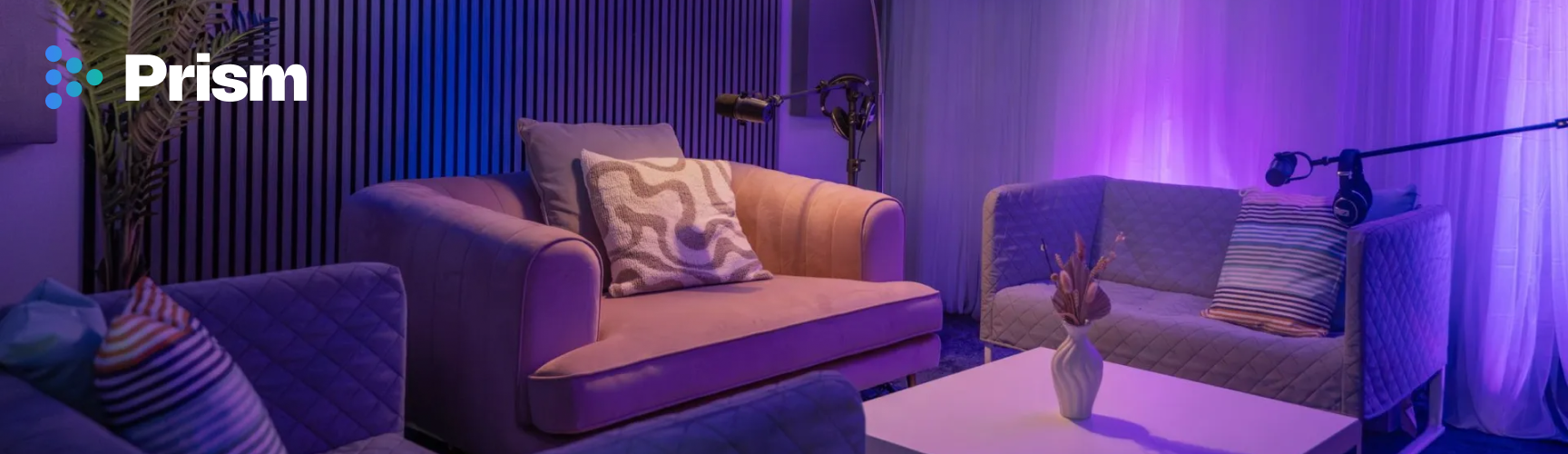
Paul has grown Prism Studios from freelance photography into a full-scale creative business, and last summer, he opened the doors to a permanent studio space here at The Causeway. Since then, the business has expanded into podcasting, welcomed clients into a professional studio environment, and continued to grow its creative offer.
We caught up with Paul to talk about taking the leap, building a business from scratch, and what having a home at The Causeway has changed for Prism Studios.
Paul, what has been your proudest professional achievement so far?
Starting a business from scratch! My proudest professional achievement has been evolving from a freelance photographer into a full-scale business owner. It involved taking calculated risks and a fair bit of ‘winging it’, but that leap allowed us to build a client roster of incredible brands that we are immensely proud of today.
What did opening a physical studio mean for Prism Studios?
For a long time, we focused solely on location work. Opening our physical studio doors last summer was a dream come true; we’ve always had the name ‘Prism Studios’ so having a permanent home for our creative work and allowing us to expand into podcasting has changed everything.
What has been your biggest personal milestone while building the business?
On a personal note, raising my children while scaling this business remains my greatest overall achievement. They are the reason for my drive and passion to make the business a success.
How would you describe your time at The Causeway?
The Causeway team has been a massive pillar of support for us. From the moment I first saw the space, I knew it was the perfect fit for our studios. The staff are really welcoming and friendly – they’ve made us feel right at home and nothing is ever too much trouble for them.
How has being based at The Causeway benefited Prism Studios?
Being based at The Causeway has elevated our professional image. The building itself is a huge asset for us, it’s impressive to bring clients into and the onsite perks like the café, co-working spaces, and free parking give our clients a premium experience they can’t find elsewhere.
Plus, being so close to the motorway and train station makes us incredibly accessible. The office layout actually allowed us to create two separate studio spaces – an advantage we hadn’t even considered until we moved in!
What should people know about Prism Studios now?
We are passionate about making high-quality content accessible. Our studio hire starts at just £199 per hour, which includes filming, technical staff, and a fully edited video piece. Our spaces are incredibly versatile – perfect for podcasts, course content, audiobooks, promos, and social media.
We are also thrilled to be rolling out our new ‘Podcast Masterclass’ for anyone looking to launch a successful podcast but needing a roadmap to get there.
A workspace that supports the next stage of business
Paul’s story is a great example of what the right workspace can do for a growing business.
For Prism Studios, moving into The Causeway wasn’t just about having a place to work from. It gave the team a professional space to welcome clients, room to expand their services, and the flexibility to shape the studio around the way they work.
That’s what The Causeway is here for: giving founders, start-ups and small businesses the space, support and setting to take their next step with confidence.
Explore workspace options at The Causeway
What does the next stage look like for your business?
Whether you need a coworking space, a private office, or somewhere professional to meet clients, The Causeway gives you flexible workspace options that fit around how your business actually works.
BOOK A TOUR
Connect and collaborate.
Explore workspace options at The Causeway and find the right setup for your team.
Explore related articles.




Coworking spaces are just workplaces where people and businesses share several services that are all wrapped up in a flexible membership that can change to suit their needs.
While more cost-effective than traditional office spaces, the reason people like these places isn’t just because they’re cheaper. It’s the structure and focus this professional setting offers that beat the distractions of working from home or the hustle and bustle of a cramped coffee shop.
Here, we’ll look at what coworking is (including a quick history lesson on it), how membership works, as well as other things that will help you choose a space with confidence.
By the end, you’ll not only know what a ‘hackerspace’ is (more on that later) but also whether a hot desk or small private office is right for you.
What is a coworking space?
A coworking space is a purpose-built area where people work side by side and share facilities.
What makes them popular is the ready-to-use services, such as super fast wifi. It can also be a great place for businesses to hold client meetings or internal ones.
Whereas coworking used to be used just by freelancers and sole traders, today’s users include:
- New businesses who haven’t got the money to rent a dedicated office
- Hybrid corporate teams that need a place to meet up and work together
- Solo consultants who want to meet clients in an appropriate setting
- Contractors who need a reliable base in an area
While working from home or a coffee shop is fine, these places just aren’t built for getting work done over an entire day. Private booths and noise-managed zones allow people to really get stuck into their project, and all without worrying if the wifi is going to go down.
The community element is a benefit that is often not thought about. While you can just crack on with work, there is also a chance to attend workshops or make introductions that create new opportunities.
All in all, coworking areas provide practical spaces for people in a professional setting, making it an increasingly popular choice for many.
A (very) brief history of coworking
The first coworking space can be dated back to the late 90s in Berlin. Called ‘hackerspaces’, they provided coders and software engineers with a place to collaborate and learn.
The mid-2000s saw purpose-built coworking spaces become what we know today, with the first ‘official’ one opening in San Francisco in 2005.
The rise of cloud technology and mobile tools made flexible working more of an option for startups, though the typical Monday to Friday, 9-5 office routine was still a firm favourite among big business.
Then, COVID happened. Suddenly, the world shut down, and people retreated to (largely makeshift) home offices. This made hybrid work the norm and raised demand for short-term, scalable spaces.
So, what was once a workaround or place for new businesses has now become a mainstay of people’s working life, with around 39% of the British population (21.5 million) now working from somewhere other than the office for at least some of the time.
How coworking works day-to-day
Most people looking for a coworking space will pick a membership which matches the rhythm of their workday, with day passes handy for occasional needs and dedicated desks better for people who have a more set routine.
Fobs, passes, and QR codes make access to these spaces seamless. Most places also have the option to book dedicated meeting spaces or phone booths through an app or online portal.
All of this, remember, is available and managed on a simple monthly bill.
So what does a typical day look like? Well, it starts by parking up in one of many spaces or leaving your bike in a secure storage space and then using your phone to get into the building, signing in guests if necessary.
Then simply find a quiet zone to get some deep work done or set up on a collaborative table for your team. Should tech issues arise (which they inevitably do!), an on-site team will be on hand to help fix the printer or sort the webcam out, problems which could threaten to derail your afternoon.
As your need for a space increases, so can your membership. Desks can be booked for busier quarters or rooms for sprint weeks, all of which can be dialled back without the pain of a traditional lease.
Essential features and amenities to expect
There are a few essentials that any modern coworking space which is built for the modern freelancer or business must have, like:
- Business-grade wifi
- Ergonomic seating
- Plenty of power sockets
- Reliable printers, copiers, and scanners
- Private booths for calls
- Breakout spaces for networking and informal chats
Meeting rooms matter too, so look for places with screens and built-in video conferencing kits so that your next client call or team workshop goes off without a hitch.
Intentionally spaced zones are also a nice feature. Quieter areas for deep work that are thoughtfully placed near more collaborative spaces allow different types of work to get done side-by-side.
Nice to haves in a coworking space include an on-site cafe serving drinks and snacks to power your day (preferably one which is local to the area). And, if these can be enjoyed in a breakout lounge, even better.
Community-led features also help to create a sense that this space is more than just somewhere to look at your laptop for eight hours. Lunch-and-learns or after-work socials allow you to grow your network without committing to many hours of your day..
Who gets the most value from coworking?
Typically, consultants and freelancers tend to get the most immediate value from coworking, with that separation of home and work helping to sharpen their focus and offer a professional setting to meet clients.
Startups value the predictable monthly costs and avoid the headaches that come with fitting out an office space. These exciting new businesses can also recruit with confidence by giving top talent a place to work that scales as they grow.
Since COVID, corporate teams that have shifted to hybrid working use these areas as a place to regroup and work in well-equipped rooms that are located in areas easily accessible by people who live nearby. They also act as a handy spot to be near important clients or to help attract talent with the promise of a dedicated space for them to work.
What you see quite quickly is just how many types of people benefit from coworking, for example:
- A two-person marketing team looking to plan a campaign can get loads of work done for it at some dedicated desks
- Web developers for an agency can use a 6-person meeting room to carry out sprints on certain days
- Regional sales teams can use private booths for calls or book spaces to host new leads
Those who get the most value out of coworking environments are the ones who use the space and all its facilities to the maximum.
The benefits of coworking and why the drawbacks are minimal
The obvious benefits of coworking spaces are the consistent, adjustable month-to-month terms and the purpose-built environment that makes those who use them more productive.
Predictable cost is another key benefit. Overheads like utilities, furniture, and maintenance are shared, meaning costs are kept relatively low and office-grade features like A/V-equipped meeting rooms are available at the drop of a hat.
Potential drawbacks are there, but they are manageable. Open areas can be quite lively, but quiet zones and booths help you to focus on work if that’s your day’s purpose.
While your business’s brand won’t be featured in the building, presentations in meeting rooms can include brand-heavy decks, and these private spaces can act as your de facto office space to impress clients.
The perfect test to decide if the drawbacks outweigh the benefits is to spend time at a space when you’re at your busiest and judge how the wifi, noise levels, and room availability match your team’s way of working.
If you’re weighing up hot desks, dedicated desks, or a small private office, the next step is to see it in action. Explore memberships, compare options, and speak to the on-site team about tours and day passes.
Explore coworking memberships and compare options.
What to look for when choosing a coworking space
The first thing to start with is location and access. An easy commute to the space keeps teams attending regularly, while parking and transport links make visits, as well as early or late starts, simple.
Scrutinise how flexible the space is. For instance, can you add two desks next month to accommodate new hires? Can you switch your membership from a hot desk to a dedicated one, or secure a private room at the last minute?
Then stress test the amenities to check, for instance, that the wifi really is superfast at peak times or that the meeting rooms are ready to host meetings with remote attendees. If privacy or security are of particular concern to you, look for guest processes and how the coworking team manages access to the building. If you need private rooms, make sure they are easy to book.
If you’re happy with all of the above, ask what is included in the monthly fee before signing up. Look for clear pricing structures and a breakdown of what is included so there are no nasty surprises during your first few days there.
A good way to assess if this space is what you’re looking for is to trial it for a day. Carry out a typical work day and gather feedback from your team to see if this is a place you can see yourself and them working in.
Come and see if coworking works for you
Coworking allows individuals and teams to focus on work instead of managing expensive premises.
By choosing the level that fits you, you can get the most value out of your monthly investment, whether you just need a hot desk or a small, private office.
BOOK A TOUR
Connect and collaborate.
Explore our coworking options at The Causeway to compare plans and book a tour.